Technology
The Technology Behind DOKTEK FoodTech
Machine vision, motion, process and engineering. Four disciplines, one company — and the reason a product that arrives in random orientation on a moving belt can still be cut, filled, rolled or sorted correctly.
Four pillars
One company, four disciplines.
A machine that adapts to a natural product needs all four at once. Buying them from four suppliers is how food automation projects stall.
- 01
Vision
Industrial cameras and deep-learning models establish what each product is and where its features sit before anything touches it.
- Object detection
- Keypoint detection
- Position and orientation detection
- Defect detection
- Classification
- 02
Motion
Detected coordinates become machine coordinates, and the tool arrives where the product actually is while the belt keeps moving.
- Servo motion
- Conveyor synchronization
- Robot coordination
- Real-time positioning
- 03
Process
The food operation itself, engineered as a repeatable industrial step rather than a skilled manual gesture.
- Cutting
- Trimming
- Rolling
- Filling
- Sorting
- Inspection
- 04
Engineering
Stainless-steel machinery designed for wash-down production areas and for the line it joins.
- Stainless-steel structures
- Food-grade design principles
- Cleanability
- Modular machinery
- Industrial controls
- Line integration
Machine vision
The Machine Doesn't Just See the Eggplant.It Understands It.
Computer vision detects product geometry, analyses stem location and sends cutting coordinates to the automation system in real time.
- OBJECT
Product isolated from the belt
- GEOMETRY
Length, width and curvature
- ORIENTATION
Long axis measured in frame
- KEYPOINTS
Calyx and shoulder located
- CUT LINE
Computed for this product alone
- TRANSFORM
Image space into robot space
Interface illustration — values shown are the ones in the animation at the top of this page.
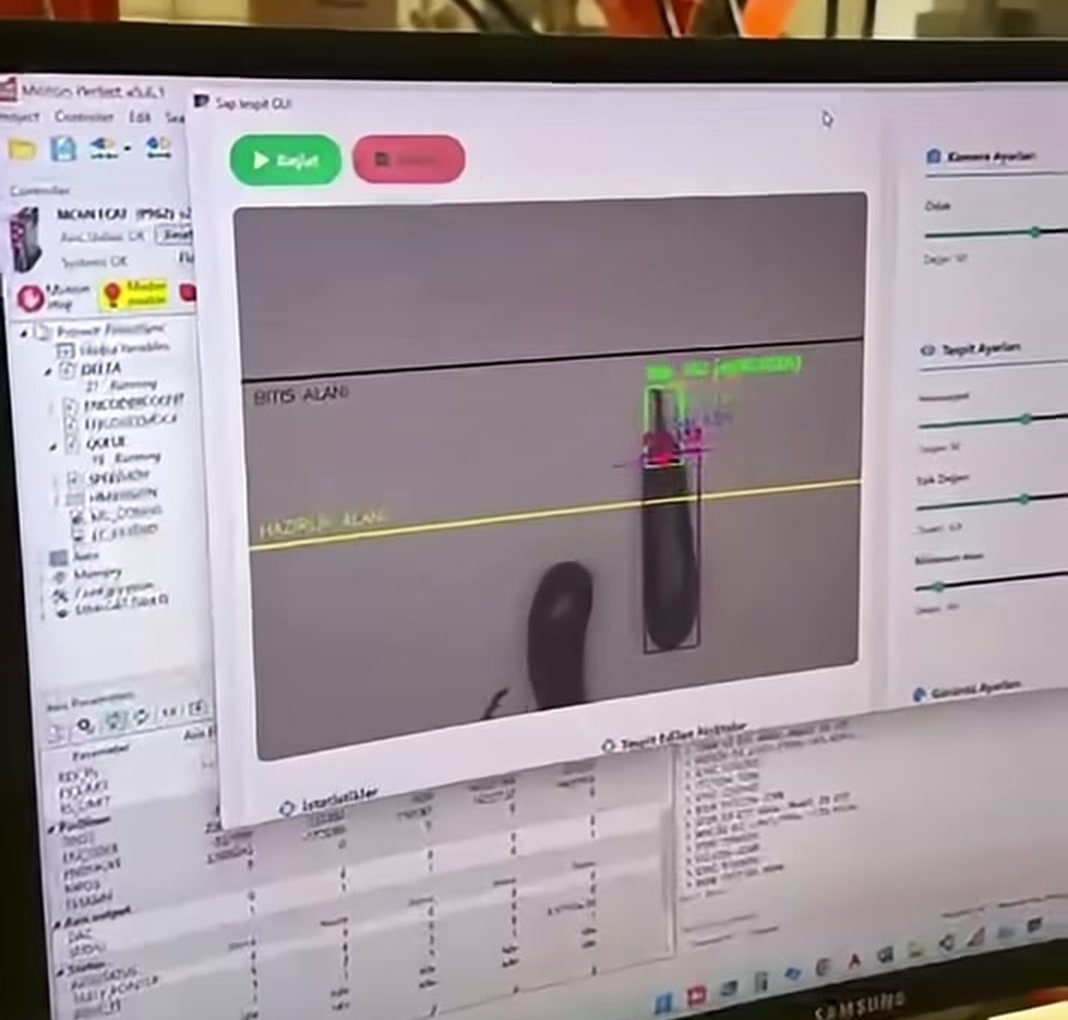
Detect → Calculate → Cut
Every eggplant is different. The cut should be too.
Doktek FoodTech analyses each product individually instead of relying on a single fixed mechanical cutting position. Three things happen to every product that enters the machine.
- 01
Detect
CAMERA FRAMEMachine vision identifies the product and its stem geometry as the belt carries it past.
- 02
Calculate
GEOMETRY · CUT LINESoftware determines the cutting location for that product alone, in real time.
- 03
Cut
ROBOT FRAMEThe automation system executes the trim on the moving belt.
- Camera frame
- Geometry
- Keypoints
- Cut line
- Robot target
- Cut
Deep dives
Read the engineering in detail.
Continuous conveyor cutting
Conveyor tracking, coordinate transform and what to confirm before quotation.
Explore technology →Machine vision in food processing
How cameras and detection models handle products in random orientation.
Explore technology →Automation for irregular natural products
The principle behind every DOKTEK machine: engineer the machine around the food.
Explore technology →
Evaluate your process with DOKTEK engineering.
Send a short video of the manual process and a few product photos. An engineer replies with what can be evaluated before any quotation.