Technology
Continuous Conveyor Cutting Systems
DOKTEK FoodTech designs cutting systems where product keeps moving while machine vision and motion control determine where each cut should be placed.
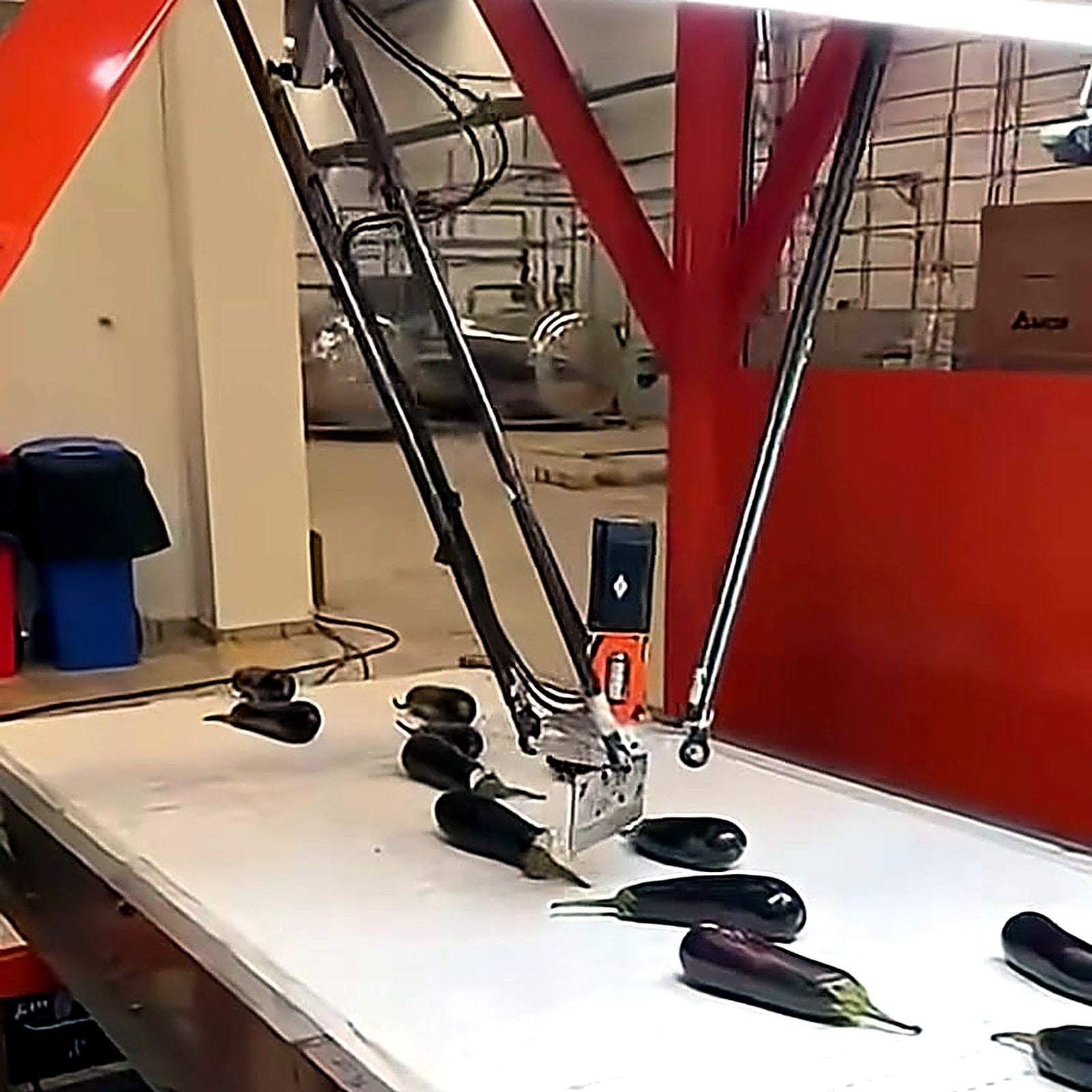
Machine summary
- Line mode
- Continuous conveyor movement
- Decision step
- Vision detection before cutting
- Motion
- Cut targets transformed into machine coordinates
- Configuration
- Defined by product, line speed, infeed and discharge
Why Continuous Motion Matters
A cutting machine can stop and index each product, or it can process product as the conveyor carries it through the station. Continuous conveyor cutting is valuable when a processor wants the trimming step to behave like part of the line rather than a separate hand-fed operation.
For irregular vegetables, continuous movement only works when the machine understands each product's position before cutting. The conveyor, camera, lighting, controller and cutting mechanism have to be engineered as one system.
Conveyor Tracking Before the Cut
The machine first needs a reliable view of the product. A camera-based inspection step detects the product and identifies the feature to be removed, such as the stem or calyx on an eggplant.
That detection is then related to conveyor movement. The cutting target must arrive at the mechanical cutting position at the moment the tool is ready, which is why product tracking and motion control matter as much as the detection model.
- Detect the product on the belt
- Locate the feature that defines the cut
- Track that target through conveyor movement
- Place the cutting action in the machine coordinate frame
From Camera Coordinates to Machine Coordinates
A vision result is not useful until the machine can act on it. The detected cut point is transformed from camera coordinates into the machine's motion frame, then passed to the control system that moves the cutting assembly.
The exact timing, encoder use, reject handling and safety interfaces depend on the application. DOKTEK confirms those details during engineering rather than publishing a generic control architecture for every line.
Best-Fit Applications
Continuous conveyor cutting is a strong fit when products arrive one after another with enough separation to inspect and act on them, but without a consistent orientation that a fixed blade can trust.
DOKTEK's public example is the automatic eggplant stem cutting machine. The same engineering principle can be evaluated for other trimming and cutting applications only after real product samples and the surrounding line are reviewed.
What to Confirm Before Quotation
A quotation needs the product range, current feed method, desired cut result, available conveyor space, discharge plan, cleaning requirements and line-control interface. Those inputs decide whether the right answer is continuous conveyor cutting, indexed cutting, a manual assist station or a different machine layout.
Frequently asked questions
Questions before a machine evaluation.
01Is continuous conveyor cutting the same as a fixed blade over a belt?
No. A fixed blade cuts at one mechanical position. A vision-guided continuous conveyor system detects the product first and places the cut according to the target calculated for that product.
02Does product need to stop before cutting?
The intended architecture keeps product moving, but the final motion profile depends on product behavior, cut result and line requirements.
03Can the same conveyor cutting approach work beyond eggplant?
It can be evaluated for other irregular vegetables, but feasibility and performance must be confirmed from real samples before any claim is made.
Next step
Request a technical evaluation for your product.
Send a short video of your current process, product photos and your target output. An engineer reviews them and replies with what can be evaluated for your line, before any quotation is made.