Engineering validation notes · Anonymized example
Eggplant Stem Cutting Automation — Engineering Validation Example
How an eggplant stem cutting application is taken from a first video to a quotation, and what has to be proven on the processor's own product along the way.
Anonymized engineering example
This page is written as a representative engineering example. It describes the validation path DOKTEK applies to eggplant stem cutting, illustrated with DOKTEK's own machine photography, interface screenshot and footage. It does not report a named customer's project and publishes no capacity, accuracy or yield figures. When a customer permits publication, that project will appear as a separate case study in the customer's own numbers.
- Application
- Stem and calyx removal before downstream processing
- Machine
- CUT-E automatic eggplant stem cutting machine
- Machine status
- Production machine
- Evidence shown
- DOKTEK's own photographs, interface screenshot and footage
- Customer
- Not named: anonymized example
- Published figures
- None; confirmed per project
The processing task
A processor preparing eggplant for a downstream step (freezing, grilling, pickling or further cutting) removes the stem and calyx from every fruit. In the manual method, operators at a trimming table pick up each eggplant, orient it and cut by eye.
The automation question is not whether a blade can cut an eggplant. It is whether a machine can decide where to cut on fruit that is different every time, and do it on a moving belt without an operator aligning each piece.
What the evaluation starts from
An evaluation starts from material the processor already has, not from a sales visit.
- A short video of the current trimming process
- Photos of typical, smallest, largest and most curved fruit
- Examples of an acceptable cut and of an unacceptable one
- Target output in kg/hour or pieces/hour, and the operators on the task today
- How fruit arrives at the station and what happens after the cut
Product variability to account for
Eggplants are natural products, and the variation that matters for cutting is recorded before any configuration is discussed. None of it is unusual; all of it has to be handled.
- Length, diameter and curvature within one delivery and across the season
- Size and shape of the green calyx, and how far it extends over the fruit
- Stem length and angle, including broken or bent stems
- Surface condition: moisture from washing, bruises and damaged fruit
- Differences between the varieties a plant processes in the same week
Machine vision challenges
The vision system has to find the calyx and stem on every fruit, in whatever orientation it arrives. DOKTEK's stem-detection interface shows the result for each product: a detection box around the fruit, keypoints located at the calyx and the computed cut line.
The difficulties are specific: dark, glossy skin that reflects light; a green calyx that must be separated from both the fruit and the belt; stems that can point in any direction; and fruit lying close to other fruit. Lighting, camera position and the deep-learning model are evaluated against the processor's own images, not against ideal ones.
Feeding and orientation
Vision removes the need to align each fruit. It does not remove the need to feed the machine properly: the cut can only be placed on fruit the camera can see individually and the robot can reach in time.
- Fruit presented in a single layer, not stacked
- Enough spacing for the camera to separate one fruit from the next
- A feed rhythm the upstream equipment can hold for a full shift
- Random orientation is acceptable; overlapping fruit is not
- Belt speed matched to the robot's working window
Cutting consistency requirements
A cut is correct only against criteria agreed before the trial. "Remove the stem" is not a specification; the processor's downstream process defines what the cut face must look like.
- Whether any green collar may remain on the fruit
- How much edible flesh may be removed with the cap
- What the cut face must look like for the next process
- How residual calyx, over-cut fruit and missed fruit are counted
- Where removed caps go, and how they are kept out of the product stream
What must be confirmed during testing
The trial exists to confirm, on the processor's own product, the points the quotation depends on. Results are recorded against the agreed criteria on DOKTEK's trial-record form.
- The size and shape range the configuration handles reliably
- Cut quality against the agreed criteria, counted per category
- The feed rhythm and belt speed at which that quality holds
- How out-of-range fruit is handled: rejected, passed or flagged
- Cleaning access and the documentation the destination market requires
Why every vegetable automation project needs product trials
A machine that works well on one processor's fruit can struggle on another's. Variety, growing conditions, washing and upstream handling all change what reaches the camera and the blade.
That is why DOKTEK publishes no fixed capacity or accuracy figure and quotes only after a trial. A capacity measured on graded, uniform fruit says little about a line running field-run product, and the difference is found either in a trial before the order or on the factory floor after it.
Evidence used in this example
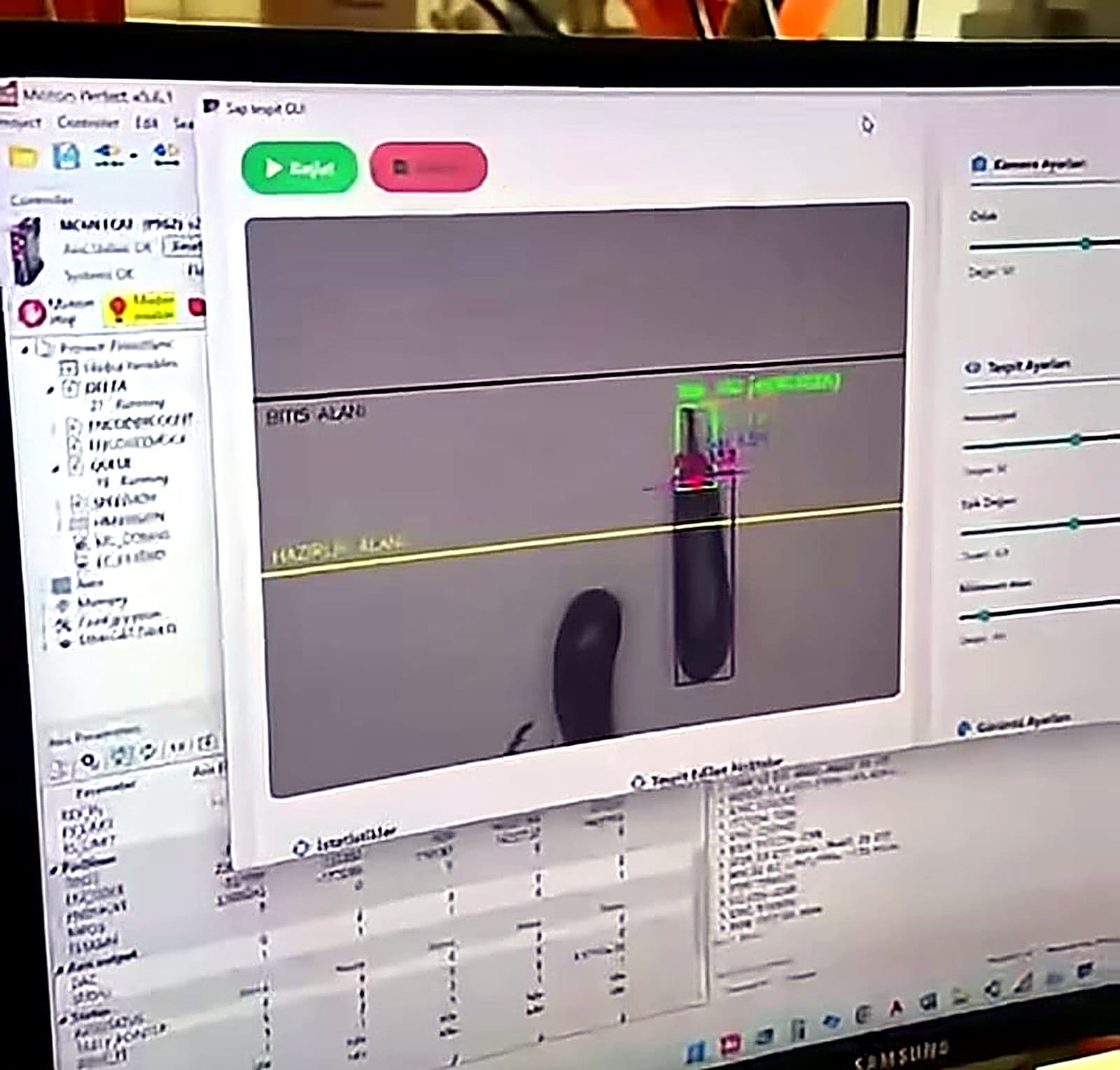
DOKTEK's stem-detection interface during a cutting trial: detection box, calyx keypoint and computed cut line. The interface also marks a preparation zone and an end zone across the belt image. 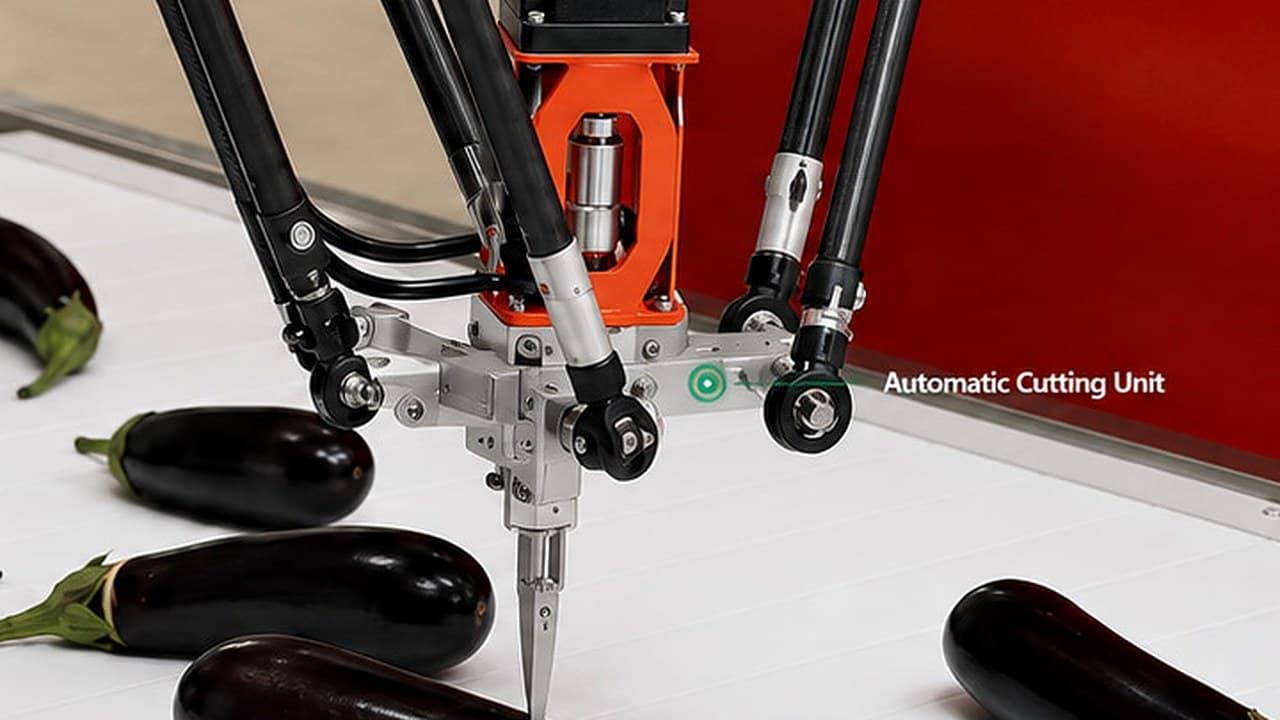
The delta robot placing the cut on the moving belt. DOKTEK's own photograph of its production machine. 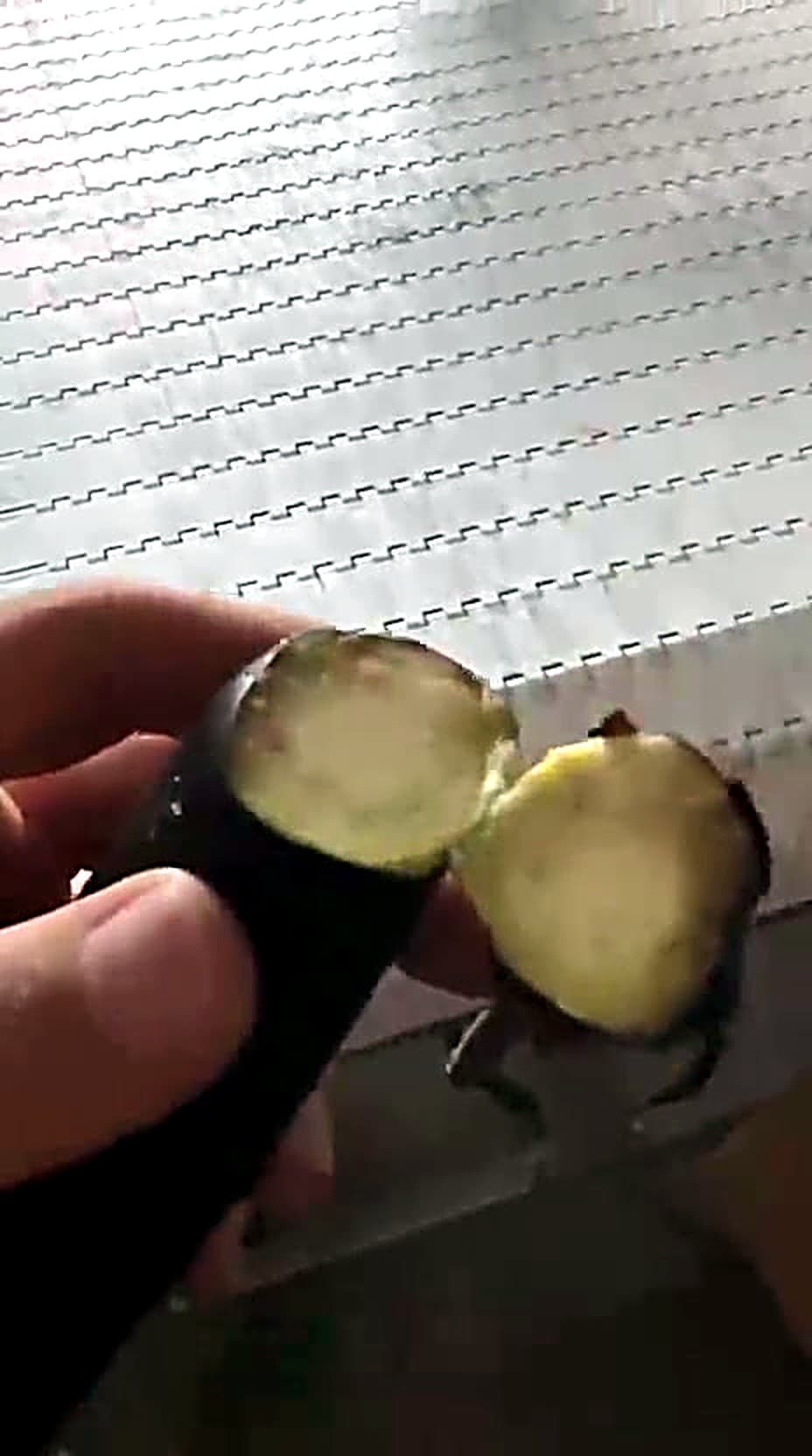
A cut sample from DOKTEK's own demonstration footage: the stem cap removed, the usable fruit kept.
What this evaluation delivers
The result of an evaluation is a documented trial record and a configuration proposal: what the machine was tested on, what it achieved against the agreed criteria, and which infeed, conveyor and interface choices follow from that.
The final quotation is built on those confirmed results. No figure from one processor's trial is published, or reused for another processor, without permission.
Run this evaluation on your product.
Send a short process video and photos across your size range. An engineer replies with the questions your configuration depends on.