Technical article
Sarmale and Golubtsi Production Automation
Sarmale and golubtsi are regional names for stuffed cabbage dishes, but a production line cannot be specified from the name alone. Leaf preparation, filling recipe, roll dimensions and what happens after rolling determine the engineering scope. DOKTEK currently has dosing and fold stations piloted on grape leaves; it has not validated cabbage on that line.
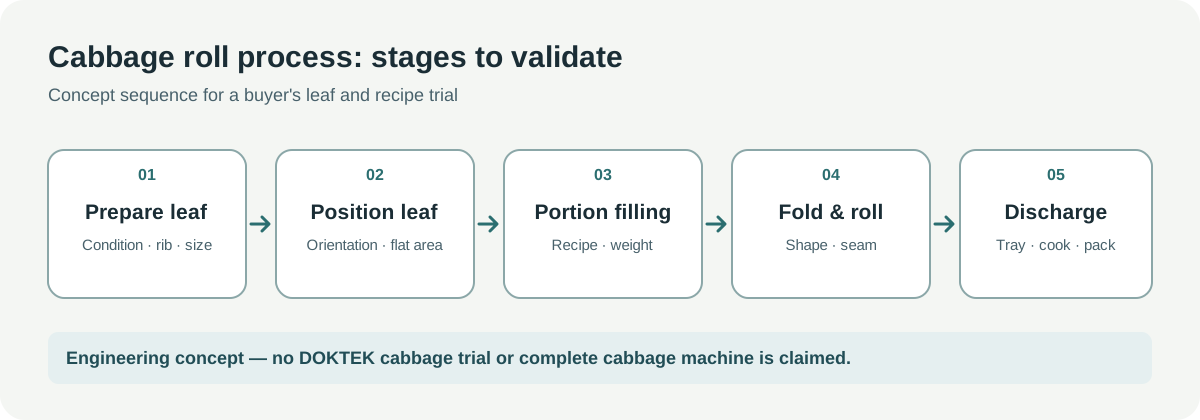
Swipe to inspect the process stages.
One Product Family, Different Specifications
A Turkish lahana sarma, a Balkan sarmale and an Eastern European golubtsi can all be cabbage leaves wrapped around filling. They may nevertheless differ in leaf treatment, rice-to-meat ratio, finished size, cooking method and pack format. An equipment enquiry should specify the actual product and market requirement rather than ask whether a named dish is 'supported'.
Start With the Prepared Leaf
Record cabbage type, whether the leaf is blanched or fermented, its usable size range, rib trimming and the proportion of leaves that tear or cannot lie flat. These are production inputs. A station can only be judged on leaves representative of a normal shift, including the awkward sizes and wettest batches.
Specify the Filling and the Finished Roll
Give the engineer the real filling formulation and its condition at dosing. Particle size, temperature and moisture affect how a portion moves; a recipe change may require a separate test. Define target weight, length, diameter, acceptable seam appearance and whether the product is cooked, frozen or packed raw. Without those acceptance criteria, 'consistent rolls' is not a measurable claim.
Map the Whole Ready-Meal Line
Separate cabbage preparation, filling preparation, portioning, leaf presentation, folding, rolling, discharge, cooking and packaging into handoffs. Note which machines already exist and where people still intervene. A roll that looks acceptable at discharge may open during tray transfer or cooking, so downstream acceptance belongs in the trial plan.
DOKTEK's current proof is limited to dosing and folding on grape leaves. Cabbage leaf feeding, rolling, tray placement and full-line integration remain proposals for evaluation, not installed capabilities.
Decide Whether to Pilot a Station
Compare the present manual operation with the proposed scope: current pieces per operator-hour, reject and rework rates, recipe changes, cleaning time and peak demand. Bring leaf and filling samples from real production and agree how acceptable rolls will be counted. Only a trial can establish a credible capacity or decide whether partial automation is preferable to a full line.
Next step
Evaluate the process on your product.
The correct automation decision depends on your product, line layout and target process.